
From Stubble to Smooth: Your 8-Month Hair Growth Inhibitor Timeline (Week by Week)
The stubble is back.
You shaved yesterday, but prickly regrowth is already making an appearance. Waxing gives you more time, but it can leave your skin tender, red, or irritated. And salon appointments? They can quickly become expensive and difficult to fit into real life.
If you are wondering how to slow down body hair growth, you are not alone. The frustration is real. Hair removal can feel like a cycle you never get to leave.
A hair growth inhibitor cream offers a different approach. No Grow combines hair removal with a built-in regrowth inhibitor designed to help hair become progressively thinner, softer, and less dense with consistent weekly use.
But this is not an overnight miracle. Hair grows in cycles, and every follicle is not ready to respond at the same time. Think of the next eight months as a steady journey, not a race.
First, understand the three phases of hair growth
Every hair follicle moves through three main phases:
- Anagen: the active growth phase, when the follicle is producing hair.
- Catagen: the short transition phase, when growth slows and the follicle begins to shrink.
- Telogen: the resting phase, when the follicle is inactive before the old hair sheds and a new cycle begins.
The timing varies by body area, hair type, and individual biology. That is why one person may notice changes sooner than another.
It is also why consistent application matters. A weekly routine gives you the opportunity to support follicles as they move through different phases over time. You are not trying to force every follicle to change at once.
The goal is steady reduction, not instant perfection.
For additional background, read No Grow’s guide to the hair growth cycle and its FAQ.
Before Week 1: Set up your routine safely
Choose the formula designed for your treatment area:
- Female Facial Hair Remover for appropriate facial areas.
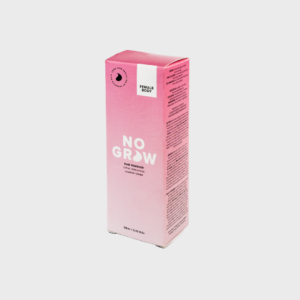
- Female Body Hair Remover for female body areas.
- Intimate Area Hair Remover for suitable intimate areas.
- Male Beard Hair Remover Growth Inhibitor for the male beard area.
- Male Body Hair Remover for male body areas.
- Soothing Aftercare Gel 90ml for post-treatment comfort.
Before your first full application, perform a patch test 24 hours in advance. Follow the instructions for your specific product and treatment area.
Important note: Do not exceed the recommended application time. Leaving the cream on longer will not reliably speed up your results and may increase the risk of irritation.
Month 1: Weeks 1–4, Starting in the anagen phase
Week 1: Your baseline
At the beginning, your skin may feel smooth immediately after hair removal, but the long-term process is only just beginning.
Take a simple mental note of:
- How quickly visible stubble returns.
- How dense the regrowth looks.
- Whether the hair feels coarse, sharp, or prickly.
- How often you normally remove hair.
You may still need your usual grooming routine at this stage. That is normal.
Apply your No Grow formula weekly according to its instructions. Use clean, dry skin and avoid adding extra product or extending the treatment time.
Week 2: Small changes may be easy to miss
Some follicles are actively producing hair, while others are transitioning or resting. Your visible results may therefore look uneven.
You might notice little or no difference yet. Try not to interpret that as failure. The cream is working within a biological process that cannot be rushed.
Pro-tip: Take a photo at the same distance and lighting every four weeks. Daily mirror checks can make gradual progress almost impossible to see.
Week 3: Focus on texture
This is a good week to notice how the hair feels, not just how much you can see.
Some returning hair may begin to feel less harsh or less bristly. You may still have visible growth, but the texture can start to feel softer.
Week 4: Complete your first month
One month is an important consistency milestone, not a finish line.
At this point, you may still be removing hair regularly. The difference is that you have started building a routine designed to address regrowth over time rather than simply cutting hair at the surface.
Month 2: Weeks 5–8, Moving through active growth and transition
Week 5: Keep the rhythm
The most common mistake is stopping when results are not dramatic yet.
Remember: consistency over intensity. Weekly application is the rhythm. Extra applications, thicker layers, or longer processing times are not shortcuts.
No Grow formulas are 100% vegan and paraben-free, but every skin type can respond differently. Continue to follow the product directions carefully.
Week 6: Regrowth may look less uniform
As different follicles move through anagen, catagen, and telogen, regrowth may appear patchier or less synchronized.
That can be encouraging. It may mean the hair is no longer returning in one dense, uniform wave, but do not expect a perfectly hair-free result.
A topical routine is designed to support long-term hair reduction. It does not guarantee identical results for every person or every body area.
Week 7: Notice the interval
Ask yourself whether you are reaching for your razor, wax, or other removal method quite as often.
The change may be subtle. Perhaps the skin stays comfortable for an extra day. Perhaps the stubble is less noticeable in certain areas. These small shifts matter because they show where your routine may be heading.
Week 8: Your first two-month checkpoint
At the two-month mark, compare your notes with Week 1.
Look for:
- Slower-feeling regrowth.
- Softer hair texture.
- Less apparent density.
- A longer interval between removal sessions.
If you see only modest progress, stay patient. Body hair cycles are not identical, and some follicles may still be resting.
Month 3: Weeks 9–12, Catagen and telogen become part of the picture
Week 9: Understand the quiet phase
During catagen, the follicle transitions away from active growth. During telogen, it rests.
This explains why a hair growth inhibitor cream cannot change every visible hair immediately. A resting follicle may not show an obvious response until it re-enters an active phase.
In simple terms:
- Some follicles are responding now.
- Some are preparing to respond.
- Some are temporarily quiet beneath the skin.
Week 10: Continue, even when the skin looks better
Improvement can make you want to stop. Resist that urge.
The goal of the eight-month journey is to maintain the weekly routine across multiple growth phases. Stopping early can interrupt the progress you have started building.
Week 11: Support your skin
After each treatment, rinse thoroughly and follow the aftercare guidance for your formula.
If your skin feels dry, tight, or delicate, the Soothing Aftercare Gel 90ml can help support a more comfortable post-treatment routine.
Important note: Stop and rinse immediately if you experience strong burning or intense stinging. Do not apply the product to broken, sunburned, inflamed, or irritated skin.
Week 12: Three months in
By now, many users begin paying more attention to reduced upkeep rather than expecting complete hairlessness.
You may notice that hair is:
- Less coarse.
- Softer to the touch.
- Slower to return.
- Less visually dense in some areas.
Progress may not be perfectly even. That is expected.
Month 4: Weeks 13–16, Building visible momentum
At four months, your routine has covered a meaningful portion of the hair cycle. Follicles that were resting earlier may now be entering active growth, giving the weekly application another opportunity to support reduced regrowth.
Week 13
Review your original baseline. Is the stubble less prickly? Are you spending less time grooming?
Week 14
Stay especially careful around sensitive zones. Use only the formula intended for that area, such as the Intimate Area Hair Remover, and follow its instructions closely.
Week 15
If you are treating facial hair, keep your routine targeted. The Female Facial Hair Remover is designed for appropriate facial areas, while the Male Beard Hair Remover Growth Inhibitor is made for the male beard area.
Week 16
This is a useful progress checkpoint. You may not have reached your final result, but you may be spending less time thinking about hair removal, and that is part of breaking the cycle.

Months 5 and 6: Weeks 17–24, Softer, thinner, less dense
During months five and six, consistency becomes even more valuable. The visible change may now be easier to recognize, particularly in areas where the routine has been followed carefully.
For body hair, use the appropriate Female Body Hair Remover or Male Body Hair Remover. Do not switch formulas casually or assume that a stronger product is automatically better.
Across Weeks 17–24, look for gradual changes such as:
- Less frequent shaving or other hair removal.
- A softer feel when hair returns.
- Reduced appearance of dense regrowth.
- More comfortable skin between treatments.
This is also where expectations matter most. Searching for permanent hair removal at home can lead to unrealistic promises. No Grow is designed to support long-term hair reduction, but results vary, and maintenance may still be needed.
Months 7 and 8: Weeks 25–32, Your maintenance mindset
Weeks 25–28: Observe the overall pattern
At this stage, compare the whole area, not just one stubborn patch.
Some follicles may be naturally more resistant. Hormonal changes, hair thickness, skin sensitivity, and body location can all influence results.
The question is not, “Is every hair gone?”
A more useful question is, “Has my grooming routine become easier, more comfortable, or less frequent?”
Weeks 29–32: Complete the eight-month journey
By the end of month eight, many consistent users are looking for a maintenance rhythm that fits their needs.
Your hair may appear progressively:
- Thinner.
- Softer.
- Less dense.
- Slower to return.
Do not expect a sudden final transformation in Week 32. The result is usually a gradual accumulation of small changes.
A published No Grow customer story describes this kind of shift: moving from frustration with recurring hair and uncomfortable grooming to feeling more confident and at ease in her skin. The important part was not one dramatic treatment. It was the steady change over time.

The result: less battling, more living
A hair growth inhibitor cream is not a magic eraser. It is a commitment to a different kind of routine.
You remove visible hair now while supporting slower, softer, less dense regrowth over time. You work with the hair cycle instead of expecting every follicle to change on the same day.
Use the right formula. Apply weekly. Patch test 24 hours before first use. Never exceed the recommended application time. Follow with gentle aftercare.
Most importantly, give the process time.
Explore the No Grow formulas. Discover a simpler way to support long-term hair reduction. Start your eight-month journey toward softer, smoother skin.
Explore No Grow. Discover less stubble. Start breaking the shaving cycle today.
No Comments